

How fashion tells stories: streetwear, heritage, and identity
Every outfit you put on is saying something before you open your mouth. The colours you choose, the cut of your hoodie, the patterns on your tee — all of it communicates who you are, where you come from, and what you stand for. As symbolism in clothing shows, garments act as silent narrators of cultural identity, social status, and personal narratives. For young adults blending African heritage with streetwear, this goes even deeper. Your look is not just aesthetic — it is a statement, a story, and sometimes, a form of resistance. This guide breaks down exactly how fashion tells stories and how you can make yours count.
Table of Contents
- What story does your outfit really tell?
- African heritage meets streetwear: Blending bold tradition and modernity
- Fashion icons and brands rewriting the narrative
- Cultural appropriation, privilege, and the limits of fashion storytelling
- Why your look is more powerful than you think
- Tell your own story through bold fashion
- Frequently asked questions
Key Takeaways
| Point | Details |
|---|---|
| Clothes are storytellers | Every outfit transmits messages about identity, heritage, and beliefs whether you intend it or not. |
| Heritage empowers streetwear | Blending African symbols with modern style lets young adults craft bold, authentic self-expression. |
| Support authentic brands | Choose fashion labels that respect culture and narrative, not fast fashion fads. |
| Every choice matters | Even small details in what you wear can carry meaning and inspire others. |
What story does your outfit really tell?
Clothing has always been a language. Long before social media, people used what they wore to signal belonging, belief, and identity. That has not changed — it has just evolved. Today, a graphic tee, a pair of trainers, or a hoodie with a specific pattern can communicate volumes about your values, your roots, and your worldview.
“Garments act as silent narrators of cultural identity, social status, political allegiance, and personal narratives” — a truth that applies whether you are walking through Lagos, London, or Los Angeles.
The storytelling power of fashion works through several layers:
- Colour: Red can signal danger, passion, or political allegiance depending on context. In many African cultures, specific colours carry deeply spiritual or communal meanings.
- Pattern and print: Geometric prints, bold motifs, and repeated symbols each carry histories that predate modern fashion entirely.
- Silhouette: Oversized fits, cropped cuts, and layered looks all speak to subcultures, movements, and generational attitudes.
- Brand logos and customisation: A visible logo is a social signal. DIY customisation, patches, and hand-painted details say something even louder — that you refused to wear something off the shelf without making it yours.
Streetw ear sits at the crossroads of all these layers. It grew out of communities that used clothing as commentary — skate culture, hip-hop, and urban youth movements all used fashion to push back against mainstream narratives. The luxury streetwear movement took this further, merging high-end craft with street-level meaning.
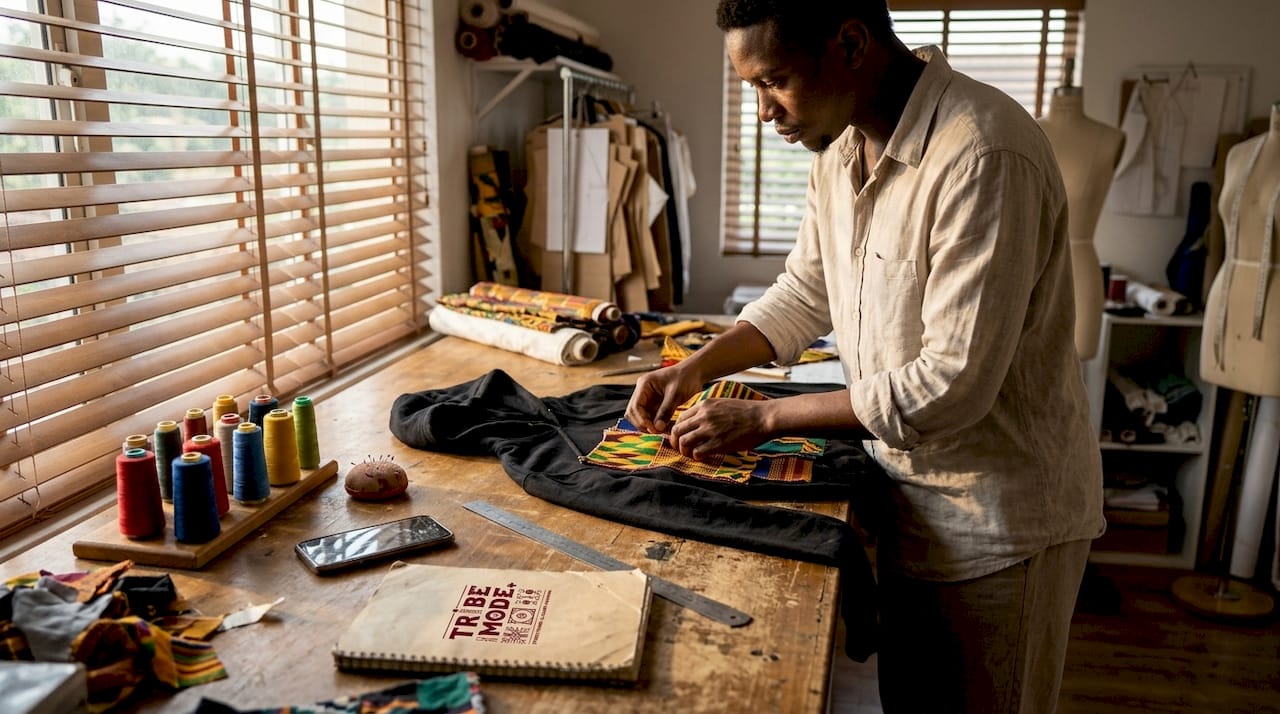
Political t-shirts are perhaps the most obvious example of fashion as storytelling. But the subtler signals matter just as much. Wearing a brand that references your heritage, choosing a fabric tied to your culture, or simply refusing to follow a trend that does not represent you — these are all acts of narrative. Strong brand storytelling in fashion shows that the most resonant clothing brands are not selling products; they are selling identity and belonging.
Your outfit is never neutral. It is always saying something. The question is whether you are being intentional about the story it tells.
Now that we see clothes are more than fabric, let us dig into the unique symbols woven into African-inspired streetwear.
African heritage meets streetwear: Blending bold tradition and modernity
African textiles are among the most symbolically rich fabrics in the world. Each one carries a story that stretches back generations, and when these textiles appear in modern streetwear, they bring all of that history with them.
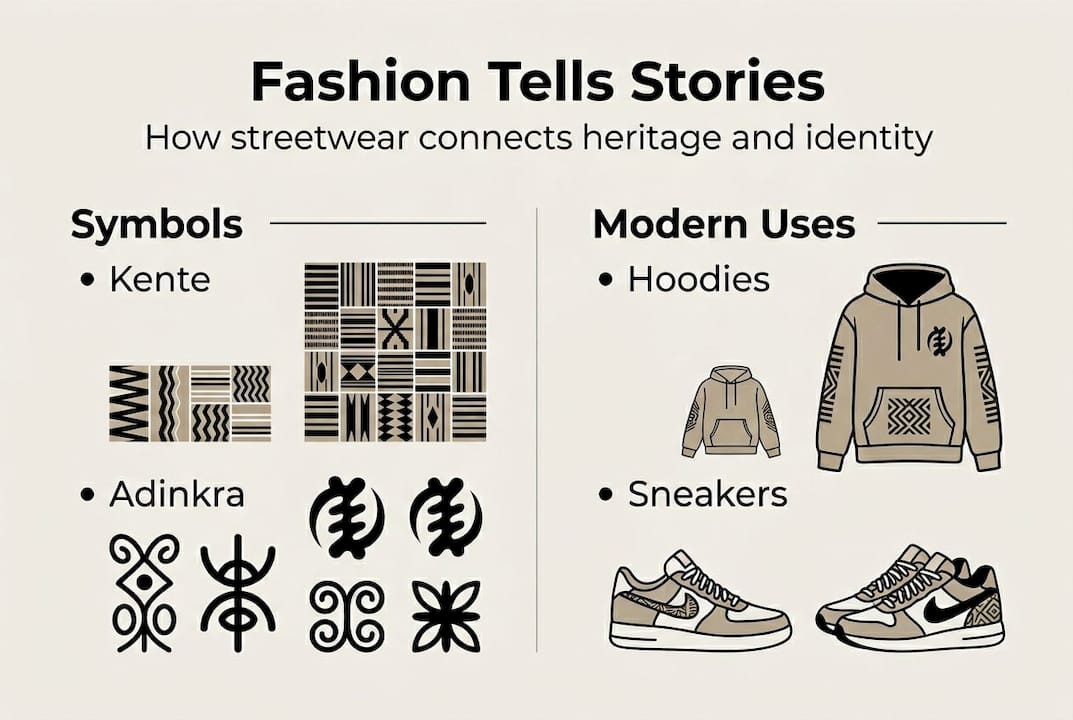
Traditional African textiles like Kente, Adinkra symbols, and Aso-Oke blend with modern silhouettes to enable bold statements of identity for young adults. This is not just fashion — it is cultural memory made wearable.
| Textile or symbol | Origin | Traditional meaning | Modern streetwear use |
|---|---|---|---|
| Kente cloth | Ghana (Ashanti) | Royalty, wealth, spiritual strength | Stripe detailing on hoodies, tees, and trainers |
| Adinkra symbols | Ghana (Akan) | Proverbs, values, philosophical concepts | Printed graphics, embroidered patches |
| Aso-Oke | Nigeria (Yoruba) | Celebration, status, community | Fabric panels on jackets and caps |
What makes this fusion so powerful is that it is not costume. Young people wearing Kente-striped hoodies or Adinkra-printed tees are not dressing up — they are dressing as themselves. The garment becomes a bridge between where they come from and where they are going.
This matters particularly for young adults in the diaspora. Growing up between cultures can feel disjointed. Fashion becomes one of the most accessible ways to hold both worlds at once — to wear your heritage proudly in spaces that might otherwise overlook it.
The contrast between traditional and contemporary interpretations is worth noting. A traditional Aso-Oke wrapper is ceremonial, tied to specific rituals and occasions. A streetwear piece using the same fabric in a bomber jacket speaks to those same values but in a daily, accessible context. Neither version is more valid — they are different chapters of the same story.
Exploring Africa cultural designs shows just how wide this creative territory runs, from bold graphic prints to subtle woven details that reward a second look.
Pro Tip: When styling heritage-inspired pieces, let one statement item lead. A hoodie with Kente detailing works best when the rest of your outfit is clean and unfussy — it lets the cultural piece speak without competition.
Having explored symbolism, let us look at the real-world fusion of heritage and style through the brands and figures shaping this movement.
Fashion icons and brands rewriting the narrative
Some brands are not just making clothes — they are making arguments. And right now, the most compelling arguments in streetwear are coming from designers who use fashion to reclaim, celebrate, and challenge.
Denim Tears and Maxhoso exemplify this, turning historical pain into revolutionary streetwear worn by influencers for cultural relevance. Denim Tears’ cotton wreath hoodie is one of the most discussed pieces in recent streetwear history — a direct reference to the history of enslaved labour, worn as both mourning and defiance. Maxhoso blends luxury craft with pan-African pride, creating pieces that feel both exclusive and deeply communal.
| Brand | Key design element | Cultural message |
|---|---|---|
| Denim Tears | Cotton wreath motif | Reclaiming Black history and pain |
| Maxhoso | Pan-African colour and craft | Luxury rooted in African identity |
| Tribemodeplus | African prints, bold silhouettes | Heritage meets everyday street style |
Beyond brands, individual figures shape what streetwear means culturally:
- Musical artists like Burna Boy and Wizkid wear African-inspired pieces on global stages, making heritage visible to millions.
- Content creators in the diaspora style traditional textiles with trainers and caps, showing that these combinations are not contradictions.
- Athletes increasingly use fashion appearances to make cultural statements, choosing designers who reflect their roots.
The impact is measurable. Visibility of African-inspired fashion in mainstream media has grown significantly over the past five years, pushing back against the long-held assumption that African aesthetics are niche or regional. These modern streetwear brands are proving that bold, heritage-rooted design has global reach and relevance.
Disrupting stereotypes through visual storytelling is not a side effect of this movement — it is the point. When a young person sees their cultural symbols on a global stage, worn with confidence and pride, it reshapes what they believe is possible for themselves.
Individual choices are amplified by the brands and influencers who shape streetwear — but is there a downside to all this storytelling?
Cultural appropriation, privilege, and the limits of fashion storytelling
Fashion storytelling is powerful, but it is not without complications. The same visibility that empowers can also distort, dilute, or exploit.
“Fashion storytelling can be diluted into marketing, limited by class and privilege, or overshadowed by fast fashion racks lacking narrative depth.” This tension is real, and ignoring it does not make it go away.
Understanding the difference between cultural appropriation and cultural appreciation is essential. Appropriation happens when elements of a culture are taken without credit, context, or respect — often by those with more social or economic power, and often at the expense of the originating community. Appreciation, by contrast, involves genuine engagement, acknowledgment, and support for the source culture.
Fast fashion is one of the biggest culprits here. A high street brand printing Adinkra-style symbols on a £12 tee without any connection to Akan culture is not storytelling — it is extraction. The fashion storytelling problem is that meaning gets stripped away when profit is the only motive.
Class and access also shape who gets to tell which stories. Owning premium heritage-inspired pieces requires disposable income that not everyone has. Regional barriers mean that some young people in the diaspora have limited access to authentic African textiles or brands rooted in those traditions.
Here is how to navigate this thoughtfully:
- Research the brand. Does it have genuine ties to the culture it references? Do the founders or collaborators come from that community?
- Look at how profits flow. Authentic brands tend to reinvest in their communities or work with artisans from the source culture.
- Wear with awareness. Knowing the story behind what you wear is part of telling it well.
- Support African storytelling in retail that centres authenticity rather than trend-chasing.
- Call it out when you see it. Silence normalises extraction. Naming it creates accountability.
Despite these pitfalls, you have the power to make fashion a genuine force for personal and cultural empowerment.
Why your look is more powerful than you think
Here is something the fashion industry rarely admits: you do not need a famous designer label or a perfectly curated wardrobe to tell a meaningful story through what you wear. The most powerful fashion statements are often the most personal ones.
We have seen this time and again. A young person mixing a vintage Ankara print jacket with plain joggers and fresh trainers is doing something culturally significant — not because it is expensive or trendy, but because it is intentional. That combination says: I know where I come from, and I am not leaving it behind to fit in.
The uncomfortable truth is that most people underestimate the cultural weight of their everyday choices. Choosing inspired African streetwear over a generic fast fashion alternative is not a small decision — it is a vote for the kind of fashion ecosystem you want to exist. It supports the designers, communities, and narratives that deserve to be amplified.
Fashion is both protest and celebration. You do not have to choose. Wearing your heritage boldly is an act of joy and resistance at the same time. No gesture is too small. Even a single piece worn with knowledge and pride contributes to a larger cultural conversation that is actively reshaping how the world sees African identity and streetwear.
Experiment. Mix. Ask questions about what you wear. The story your outfit tells is yours to write.
Tell your own story through bold fashion
You now understand that fashion is never just clothing — it is identity, history, and self-expression stitched together. The next step is finding pieces that actually carry that weight.
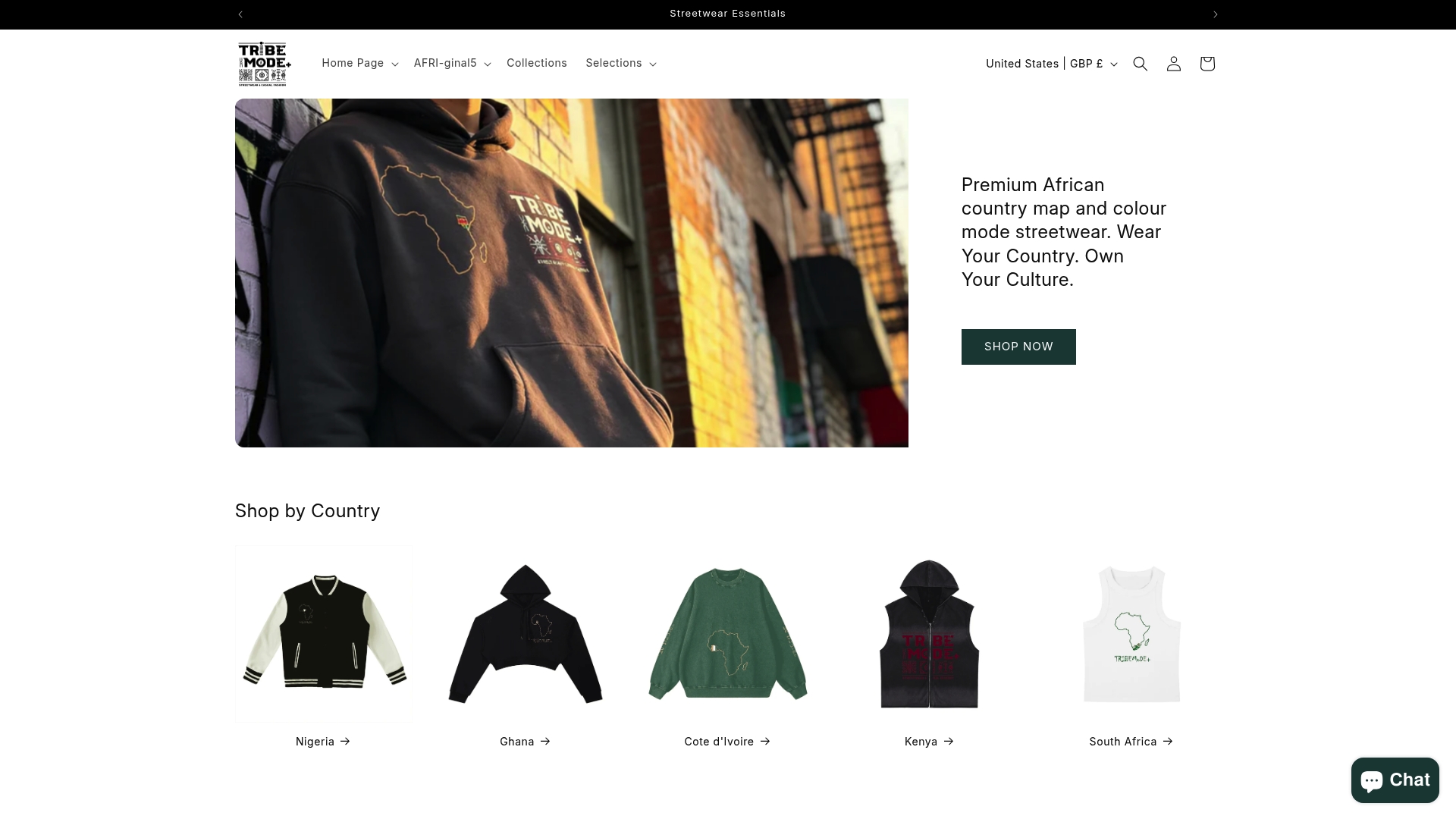
TRIBEMoDE+ is built exactly for this. Every piece in the collection is designed with cultural storytelling at its core — bold African-inspired prints, premium quality, and silhouettes that work on the street and beyond. Whether you are looking for a statement hoodie, a graphic tee rooted in heritage, or something that simply feels like you, the Africa cultural looks collection is the place to start. Wear something that means something.
Frequently asked questions
How does fashion communicate cultural identity?
Fashion uses symbols, colours, and textiles linked to a group’s heritage or experiences to tell stories about identity and belonging. As research on clothing symbolism confirms, garments function as silent narrators that communicate far more than aesthetics.
What are examples of African symbols in modern streetwear?
Designers often use Kente cloth, Adinkra symbols, or Aso-Oke fabrics on hoodies, tees, and trainers for a contemporary twist. These traditional African textiles blend with modern silhouettes to create bold identity statements.
How can I avoid cultural appropriation in fashion?
Choose brands that authentically reference and collaborate with the original culture, and wear pieces with respect and awareness. The risk of fashion storytelling being diluted into mere marketing is real, so doing your research matters.
Why do brands use fashion to tell stories?
Storytelling builds emotional connection, sets brands apart, and lets wearers express their personal or cultural narrative beyond aesthetics. Brands like Denim Tears and Maxhoso show how turning cultural history into wearable design creates lasting relevance and impact.
Recommended
- What is Luxury Streetwear? A Guide to a Modern Style Movement – TRIBEMoDE+
- TRIBEMoDE+: Trendy Fashion & Accessories Online Store
- Varsity Jacket - Varsity Jacket | Stylish Design, Quality Material – TRIBEMoDE+
- Vintage Washed Raw Edge Hoodie - Vintage Raw Edge Hoodie | Premium fleece, relaxed fit, kangaroo pocket. – TRIBEMoDE+
- Fashion Identity Explained: 70% of Youth See Style as Self – ELEDOasis
- Role of Streetwear in Culture: Identity, Sustainability, Impact – MEXESS